

Core Training: The Foundation of Strength
Core training for strength and stability is one of the most valuable things you can invest in, whether your goal is to feel stronger, move without pain, improve your lifts, or yes, work toward a flatter stomach or visible abs.
Your core is involved in almost everything you do. From getting out of bed, unloading the dishwasher and playing on the floor with your child, to push-ups, squats, deadlifts and carrying heavy groceries. It is the central link between your upper and lower body and plays a key role in how efficiently and safely you move.
This blog goes beyond the idea of core training as just abs. You will learn what the core actually is from an anatomical point of view, how it transfers force through your body, why it protects your back, and how proper core training improves both daily movement and performance in the gym. We will also cover what good core exercises look like, what bracing really means, and how to apply core tension in a way that matches the task you are performing.
If you want a body that feels strong, resilient and capable, this is where it starts!
What is the anatomy of the core, really?
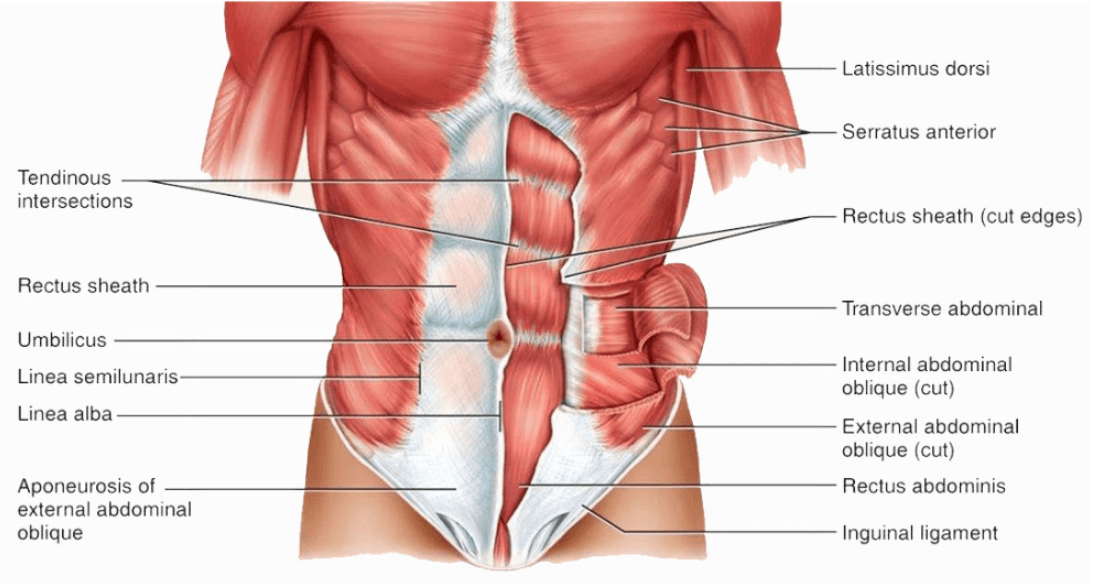
The core is the central part of your body. It includes the spine, pelvis and rib cage, and all the muscles that support them. Think of the abdominal wall, sixpack muscles (obliques and rectus abdominis), back muscles, diaphragm, pelvic floor, hip flexors, and the connective tissue that links everything together.
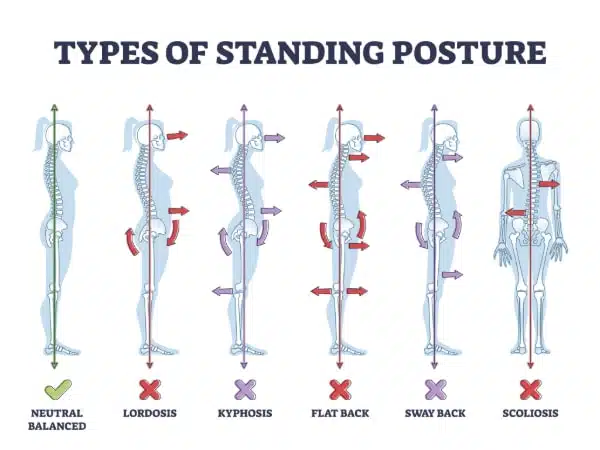
Your spine has natural curves. Its shape is a double S-curve, which is exactly how it is meant to be. This means that when people talk about keeping a “straight back”, that is actually incorrect. A healthy spine is not straight. Instead, it moves and stabilizes within what we call the neutral zone.
In this neutral zone, the ribs and hips are stacked, the natural curves of the spine are maintained, and stress on passive structures such as ligaments and discs is minimal. The spine is designed not only to move, but also to transmit forces. That force transfer is one of its most important functions.
The pelvis plays a crucial role in this system. It is directly connected to the lower spine, meaning that when the pelvis moves, the lumbar spine moves with it. This is why pelvic control and core control are inseparable. Together, they form a central hub through which energy travels.
All of these structures work as a coordinated system. With core training, we consciously train this system so that over time it learns to contract subconsciously during daily movements and lifts in the gym. That is where the real value lies: you do not have to think about your core all day. Your body simply knows how to create stability when it is needed.
Why is core training important?
Your core is your foundation for force transfer and load capacity. Imagine your body as a system of pipelines, with energy flowing through them like water. When you do a push-up, force is generated through the floor and legs, transferred through your torso, and expressed through your arms and chest. For that to work efficiently, the pipeline in the middle needs to be solid.
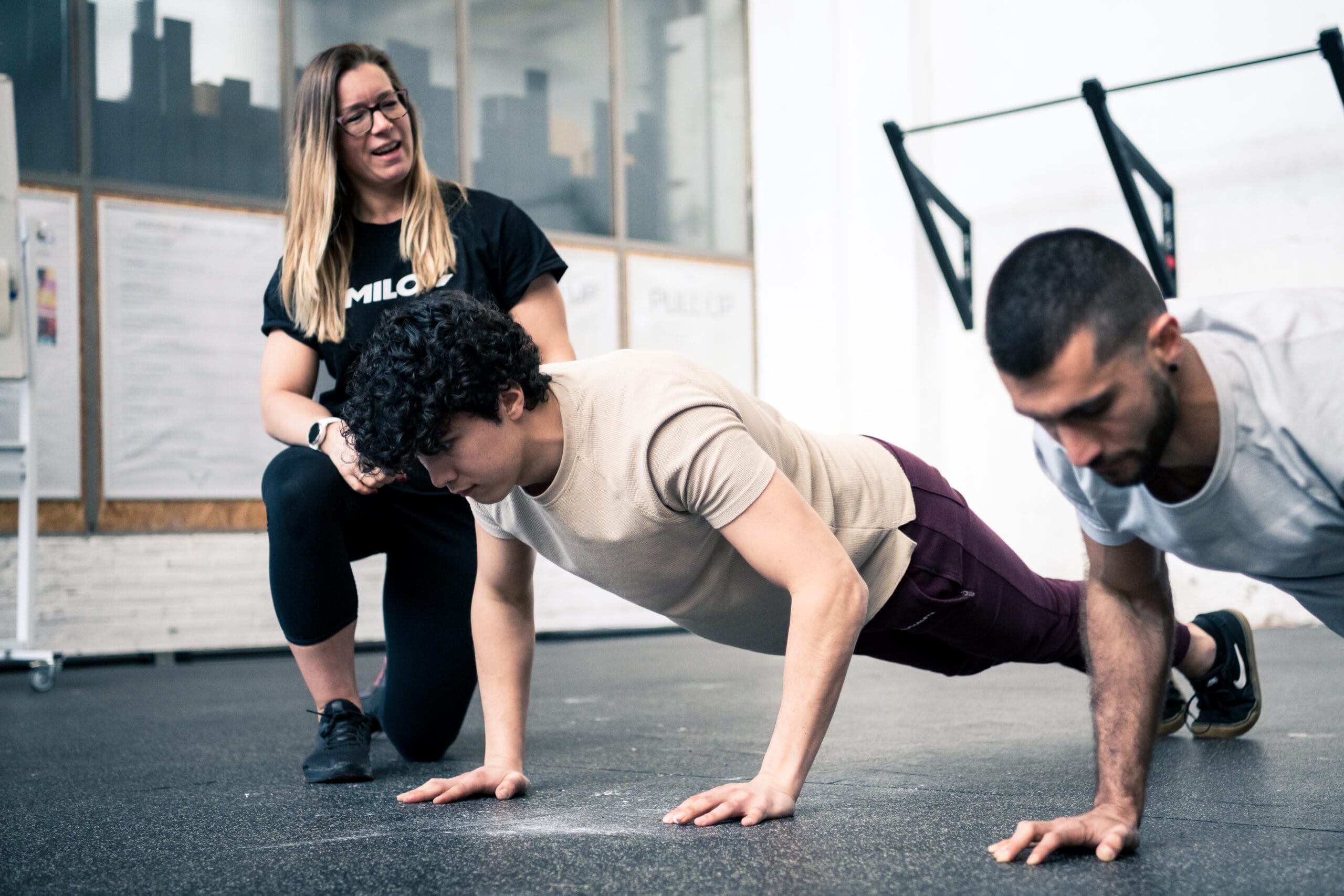
If the core is unstable, energy leaks out. A common example of this is an overly arched lower back during a push-up. Instead of energy moving smoothly through the torso, it escapes through the spine. The result is less power, less control, and more stress on structures that are not meant to take that load.
The same principle applies to a barbell squat. To produce as much force as possible through the legs, we want the spine to stay within its neutral zone, with ribs and hips stacked and tension around the entire torso. Overarching or rounding the back under load causes energy to leak through the core instead of being transferred into the barbell.
Outside the gym, this matters just as much. Lifting grocery bags, picking up boxes, carrying laundry, or playing with your child all require force transfer. Core training for strength and stability is about moving energy through your body instead of leaking it into your back. When the core does its job, your spine is protected and your movements feel stronger and more controlled.
Understanding the neutral zone and core stiffness
A neutral spine is not one fixed position. It is a zone. Within this zone, the spine can tolerate small degrees of movement while still being considered neutral and well supported.
In training and daily life, the goal is not to be perfectly rigid. The goal is to maintain position relative to the task. This is where core stiffness comes in. Core stiffness means that the muscles around the spine and pelvis work together to resist unwanted movement, allowing force to pass through the torso safely.
Some spinal movement is inevitable, especially under load. What matters most is maintaining position rather than losing it.
What is bracing?
Bracing is the act of creating tension around the entire torso. Think of creating core tension as inhaling by inflating a balloon inside your abdomen and rib cage. The abdominal muscles, back muscles, diaphragm and pelvic floor work together to create intra-abdominal pressure and stiffness.
Bracing is not about sucking your stomach or belly button in. If you place your hands around your waist, you will notice that sucking in does not create more tension. True bracing is about expanding 360 degrees: front, sides and back.
You can compare the torso to the mast of a sailboat. A mast cannot stay upright with just one cable pulling from the front. It needs tension from multiple directions to remain stable. If a single cable had to do all the work, the mast would collapse. Your core works the same way. It is not one muscle that keeps you stable, but the combined tension of all the muscles surrounding your torso.
How to put bracing into practice
There are three practical ways to learn and feel bracing:
- Use your breath. Inhaling through the nose presses the diaphragm and pelvic floor down. When you exhale through an imaginary straw with a hard F or S sound, the diaphragm and pelvic floor are pulled back up. This creates natural tension through the core.
- Activate the deep core muscles, specifically the transversus abdominis. Imagine zipping up from in between your legs, past your belly button, up toward your rib cage. You can connect this zip-up to your exhale. When done correctly, you will see your lower belly gradually tuck in and your belly button move slightly upward.
- Use tactile feedback. Place your hands on your sides, with four fingers on the front side of your core and your thumbs on your lower back. When you fully exhale, you should feel the muscles under your fingers, especially the obliques, expand and tense up.
An important concept related to bracing is Tension to Task. The amount of core tension you need depends on what you are doing. Picking up an empty box might require one out of ten tension. Carrying a heavy grocery bag might require five out of ten. Pulling a maximal deadlift off the floor requires close to ten out of ten. Learning to scale tension to the task is a key part of effective core training for strength and stability.
What are good core exercises?
Good core exercises train the core to do what it does best: resist movement and maintain position.
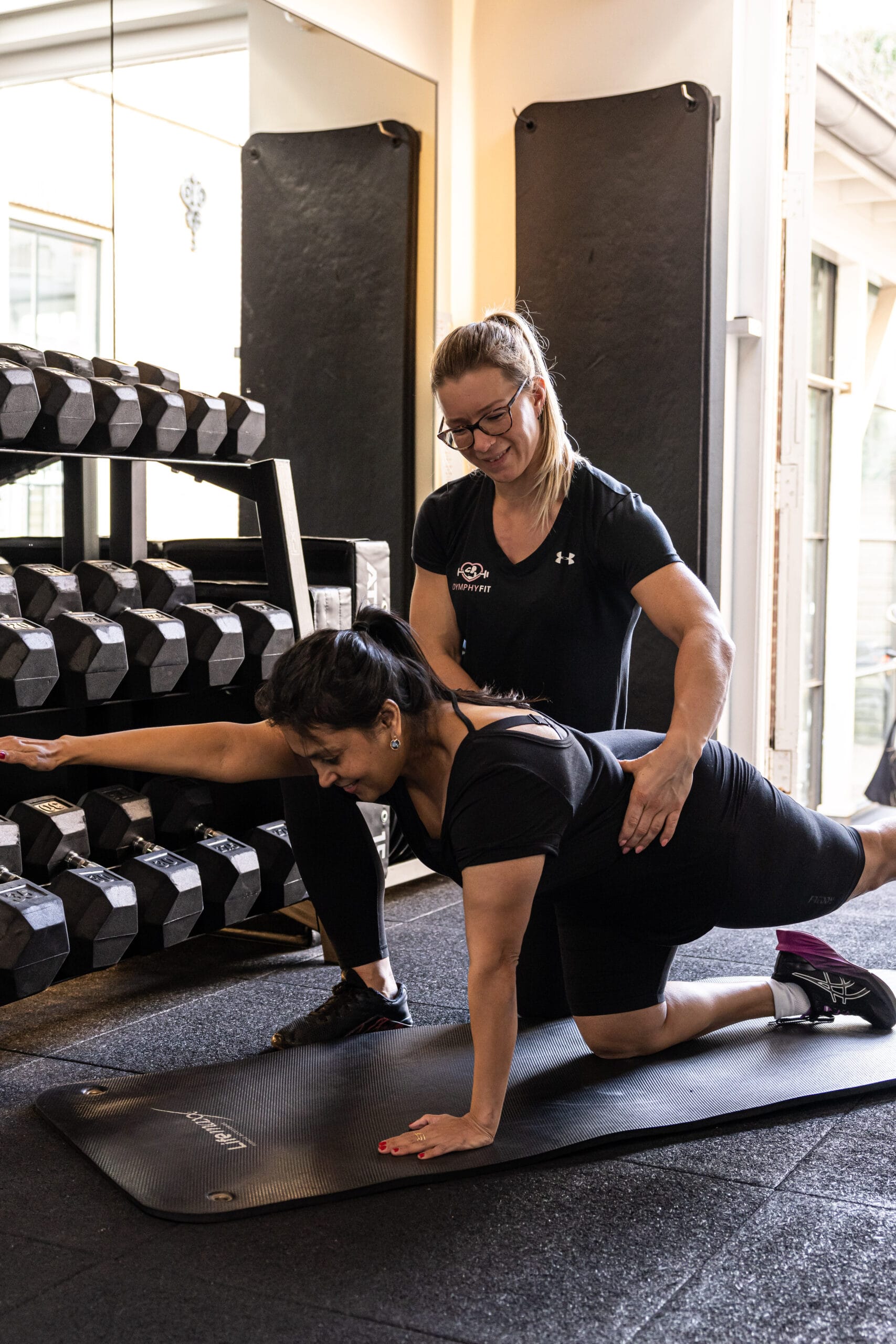
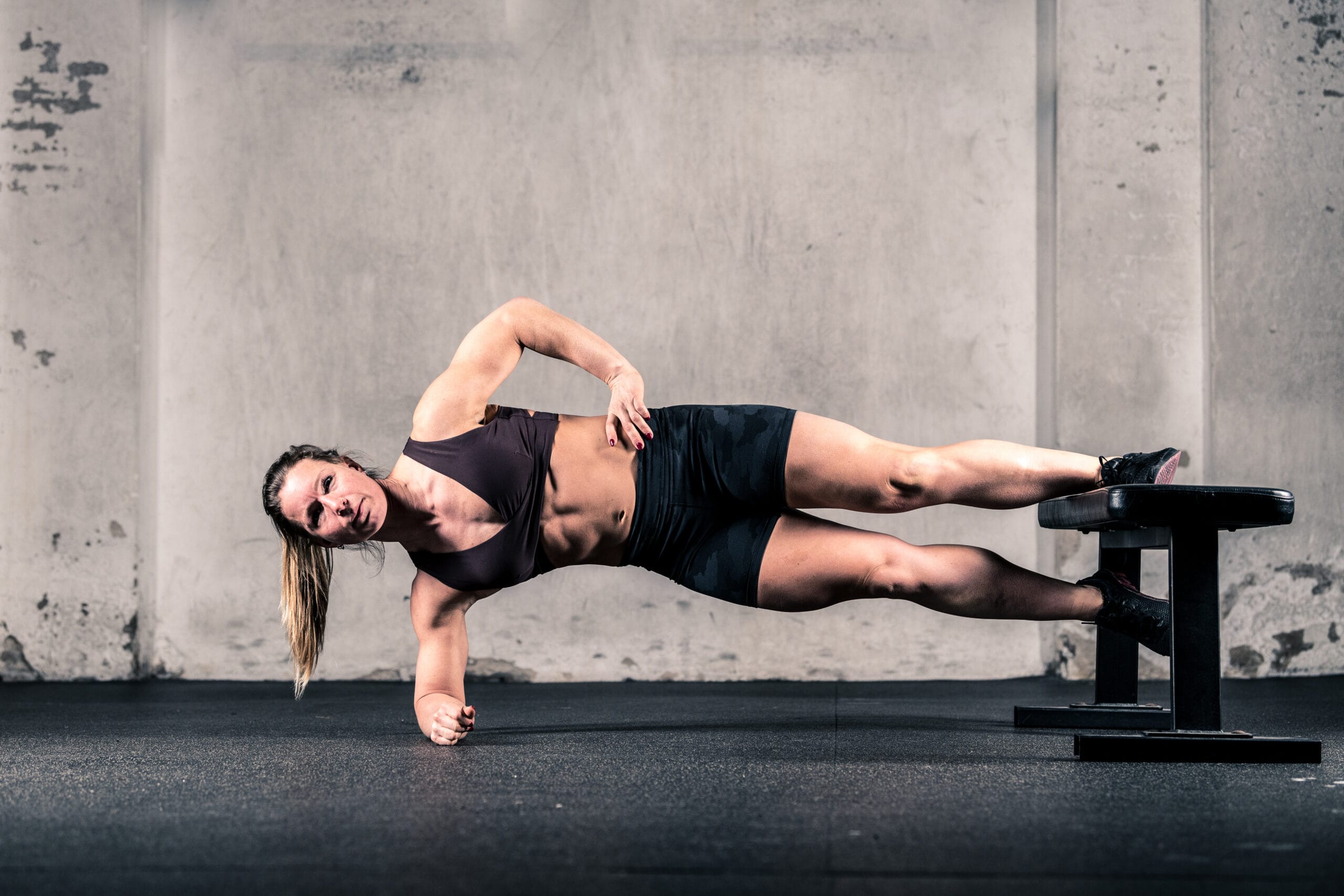
In daily life and most strength training, the core primarily works in a stabilizing role. This is why so-called anti-movement exercises form a strong foundation. These include anti-extension, anti-flexion, anti-rotation and anti-lateral flexion exercises. Examples are planks, dead bugs, bird dogs, carries, Pallof presses and variations of holds under load. In these exercises, the spine stays relatively still while the muscles work hard to prevent movement. Below this section, the table shows the four main anti-core patterns, their meaning, and real-life or gym-based examples.
| MOVEMENT PATTERN | MEANING | EXAMPLE |
| Anti-extension | Preventing arching of your back | Push up, plank, dead bug, bird dog |
| Anti-flexion | Preventing rounding of your back | Back extension, deadlift, good morning, picking up your kid in front of you |
| Anti-rotation | Preventing rotation of your back | Pallof press and opening a heavy door |
| Anti-lateral flexion | Preventing side bending of your back | Side plank, Kettlebell march and carrying a heavy grocery bag on one side |
Why focus on core stiffness before dynamic core work?
Dynamic core exercises involve movement of the spine. Examples include weighted cable crunches, cable wood chops, controlled side bends and Jefferson curls. These exercises are not inherently bad, but they add complexity. Before someone can control movement, they need to control position. Static stability is easier to learn than dynamic stability. When movement is added, some muscles must relax while others contract, increasing coordination demands. These exercises require good awareness, control and appropriate loading.
In the gym, most compound lifts rely on a stiff core. Squats, deadlifts, presses and carries all depend on the ability to maintain torso position under load. Training core stiffness directly improves performance in these lifts and reduces injury risk.
Once a solid foundation is built, dynamic exercises can be added intentionally.
Is doing 15 minutes of sit-ups and bicycle crunches every day beneficial?
It is doing something, but it is not the most effective approach. Exercises like sit-ups and crunches offer limited resistance, meaning progressive overload mainly comes from doing more repetitions rather than increasing meaningful load. The transfer to daily life and strength training is also limited. Most of our daily tasks happen upright: lifting, carrying, reaching and stabilizing.
Core training that mimics these demands prepares you better for real life and for heavy lifts in the gym. That is why resisting movement and controlling position comes first, with dynamic movement layered on top later.
Core training for aesthetics
There is absolutely nothing wrong with wanting a flat stomach or a sexy sixpack. I’ve chased that goal for years myself, and I know how good it can feel to be confident in your clothes or on the beach.
That said, a quick reality check. You will not achieve visible abs by doing core exercises alone. You’ve probably heard the saying abs are made in the kitchen, and there is truth to it. Visible abs are mainly the result of fat loss, created by a caloric deficit combined with sufficient protein and fibre intake.
Core training builds function first and aesthetics second. In fact, did you know that even without specific core exercises, you can still develop visible abs through strength training? That includes big movement patterns like squats, deadlifts, pushes and pulls, as long as your nutrition supports fat loss!
So if aesthetics are your goal, core training can definitely support that journey.
Core training for function
In sum, core training for strength and stability is about building a system that can transfer force, handle load and protect your spine. It is about moving energy through your body instead of leaking it into your back.
When done well, core training makes you stronger in the gym, more resilient in daily life, and more confident in how your body moves. The aesthetics may follow, but the real win is function. That is the kind of core we train for!
Want to Learn More?
Are you a fitness enthusiast or personal trainer? Would you like to learn more about core training, anatomy, how to coach and program exercises for hypertrophy, maximum strength, and conditioning? Then the Milo Education Personal Trainer course is for you! This 30-week online and offline certification course will teach you everything you need to become a highly skilled personal trainer.
Dymphy has been a fitness enthousiast since 2008 and has been working as a personal trainer since 2013. She knows better than anyone the mental challenges of “the couch magnet” where you prefer to sit on the couch after a long day at work rather than train or thoughts such as
“I can also have a nice glass of wine tonight instead of training.”
She is fascinated by the psychological and physiological principles that underlie this. In a nutshell:
Motion leads to emotion. You produce happiness hormones dopamine and endorphins. Exercise instantly makes you feel better!
She works with different methods to get you moving. Interested? Book your free trial session now.
Our expertise
Personal training for high performers IN AMSTERDAM OUD-WEST

Strength

Slim

Mom (to be)

Fundamentals (beginners)
