

Strength: the Success Formula
When you hear the word strength, what comes to mind?
A heavy squat? Big muscles? Someone who can push through a brutal workout without giving up?
That is strength. But it is only one expression of it.
We usually think of strength as something physical. You expose your body to resistance, your body responds, and over time it adapts. The weight that once felt heavy eventually feels lighter.
But something similar happens outside the gym.
We run into difficult decisions, uncertainty, disappointment, pressure, conflict and emotions we would rather not feel. These experiences create resistance too. And just like in physical training, how you respond to that resistance shapes what happens next.
That is why I like to look at strength through three different lenses:
- Physical strength: how your body deals with resistance.
- Mental strength: how you deal with challenge, discomfort and uncertainty.
- Emotional strength: how you experience, regulate and respond to emotions.
They look different. But underneath all three sits a surprisingly similar process — the one I teach in my Strength: the Success Formula workshop:
Resistance → Strategy → Adaptation
Understanding that process may change the way you think about becoming stronger.
1. Physical strength: resistance gives your body a reason to adapt
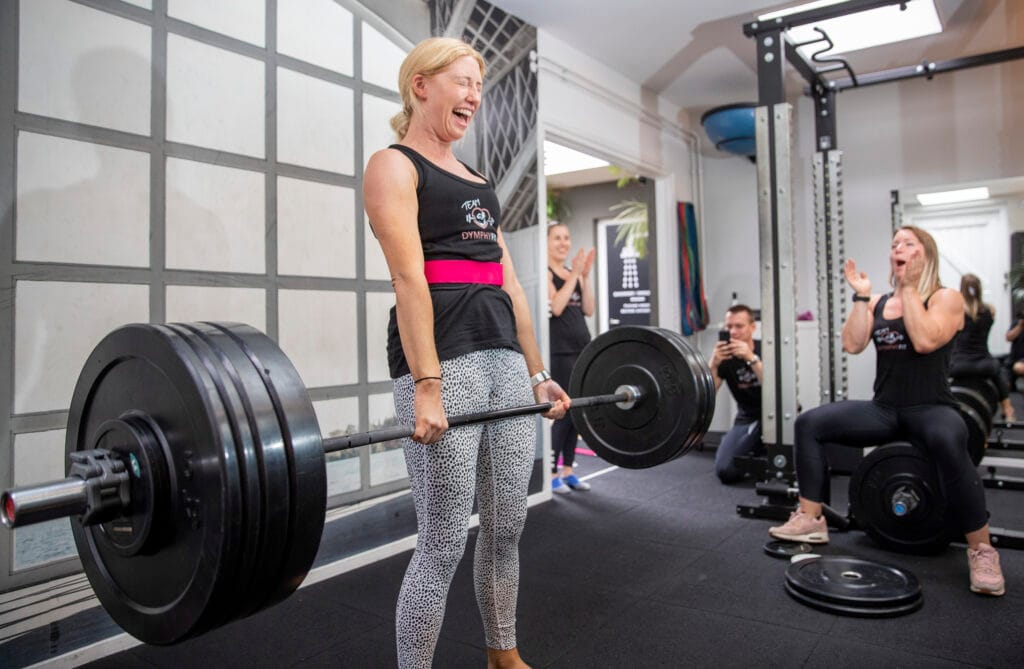
Physical strength is the easiest place to see the model in action. If you always lift the exact same weight for the exact same number of reps, your body has very little reason to change. The stimulus is familiar. To create adaptation, we introduce resistance that challenges your current capacity. So that doesn’t mean every session needs to wreck you — it means the challenge has to be big enough to actually ask something of you.
In strength training, we build that challenge gradually:
- lifting more weight
- performing more repetitions
- improving technique and control
- increasing range of motion
- progressing to a more demanding exercise
This is the idea behind progressive overload.
But resistance on its own isn’t enough — your strategy matters just as much. Training harder and harder without enough recovery isn’t an effective strategy. And neither is adding weight the moment your technique falls apart. A good training stimulus challenges the system without overwhelming it. With enough recovery, your body adapts. Something that was difficult becomes manageable. Your capacity grows. And then we introduce a new challenge.
Resistance → Strategy → Adaptation. That is how physical strength develops.
2. Mental strength: is pushing harder always the answer?
Mental strength gets more interesting, because the resistance is no longer a barbell. Maybe you committed to training three times a week, but you’re tired and unmotivated. Maybe you’re learning something new and you’re genuinely terrible at it. Maybe your progress is slower than you’d hoped, or something that matters to you requires doing things that feel deeply uncomfortable.
The obvious answer is to keep going. Be disciplined. Push through. Don’t quit. And honestly? Sometimes that’s exactly the right strategy. Plenty of progress requires tolerating discomfort instead of escaping it — you won’t always feel motivated to train, learning a hard skill involves frustration, and building anything meaningful will create moments where stopping is the easy option.
Discipline, structure and sheer persistence are like a power drill: an incredible tool. It can get you through almost any resistance.
Until you can no longer switch it off.
So if pushing harder is your only strategy, it eventually stops being strength. Persistence is powerful, but sometimes you need patience instead. Sometimes you need to change your approach, ask for help, recover, or stop pursuing something in exactly the way you’ve always pursued it. So the real question isn’t whether you can push harder. It’s this: Are you using your discipline, or is your discipline using you?
Mental strength, then, isn’t simply your ability to endure more. It’s your ability to choose the strategy that fits the situation. The goal isn’t to get better at suffering — it’s to increase the number of ways you can respond when life gets hard.
3. Emotional strength: feeling without immediately reacting
Emotional strength is probably the least visible form of strength. We tend to associate it with staying composed, being rational, or not letting things affect us. But suppressing an emotion is not the same as regulating it. Imagine someone says something that instantly triggers you. Your heart rate rises. Your body tenses. Thoughts start racing, and you want to respond right now. The resistance is already there — what happens next is your strategy.
A useful way to think about this process is:
Trigger → Feel → Regulate → Respond
One option is to react instantly — raise your voice, send the message, defend yourself, walk away. Another is to suppress the feeling completely. Neither really gives you much choice.
The harder, more useful option is creating space between what you feel and what you do. That might look like this: notice what’s happening. Instead of immediately focusing on what the other person did wrong, turn your attention inward. What am I actually feeling? Where do I notice it in my body? What do I need right now?
Emotions tend to come in waves. When you can stay with the physical sensation for a moment — instead of immediately feeding it with thoughts, interpretations and action — the intensity often shifts on its own. That space creates something important: choice.
You might still decide to speak up. You might still feel the anger, the disappointment, the hurt. Emotional regulation isn’t about switching the emotion off — it’s about REACTION vs. RESPONSE(-ABILITY): your ability to choose how you answer what happens to you. And that is its own form of strength.
Strength is not the absence of resistance
Here’s the thread that connects all three: we don’t get stronger by eliminating resistance. If you never challenge a muscle, it has no reason to adapt. If you avoid every situation where you might fail, it’s hard to build real confidence in your ability to handle failure. If every uncomfortable emotion has to disappear immediately, you never discover that you’re capable of feeling it without being controlled by it.
But more resistance isn’t automatically better, either. If you can squat 50 kilos and I load 200 onto the bar, nobody would call that a good training stimulus. The challenge has to match your current capacity.
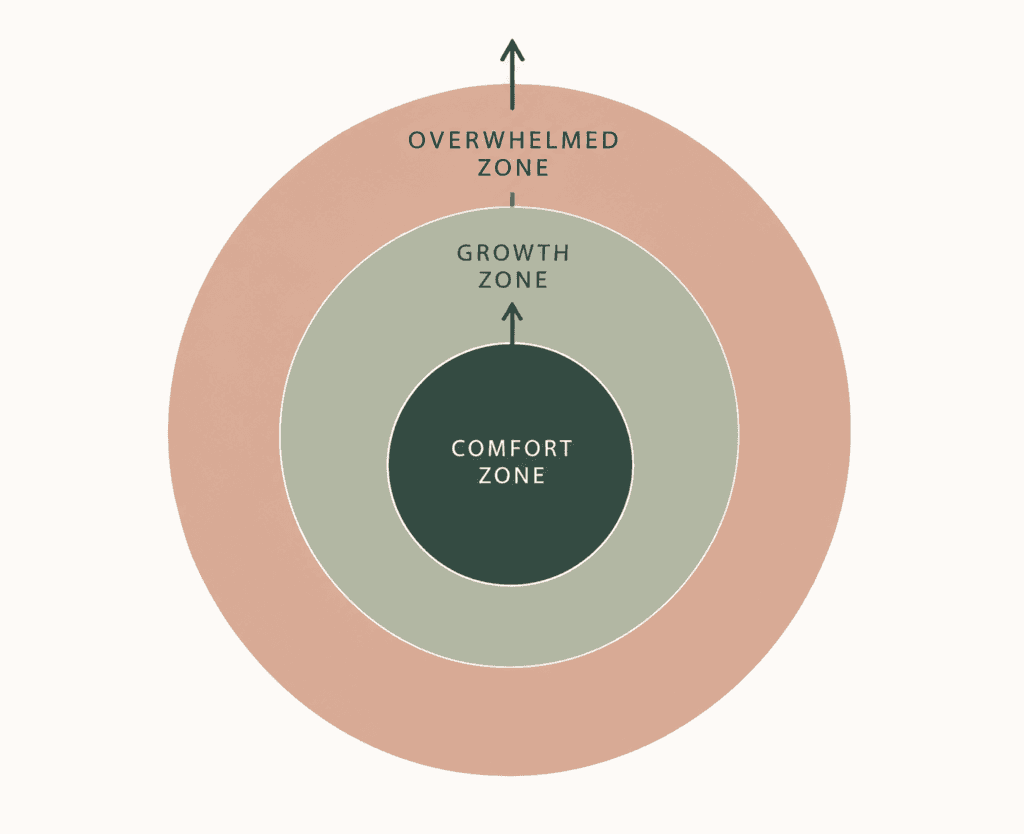
Think of your capacity as three rings:
- The first, small ring is your comfort zone. This is where things feel familiar, safe and predictable. There is little resistance here — and therefore not much reason to adapt.
- Just outside it is your growth zone. Things feel uncomfortable here. You might feel nervous, challenged or uncertain, but the task is still within reach. You have to try something new, tolerate some discomfort or use a different strategy. This is where adaptation can happen.
- Move too far beyond that, however, and you enter the overwhelm zone. The challenge is no longer simply uncomfortable; it exceeds what you can effectively deal with at that moment.
When people hear “get out of your comfort zone” they often imagine that they need to make a huge leap. Training five times a week. Losing twenty kilos. Cutting out sugar. Completely overhauling their diet. Or finally having that difficult conversation they’ve been putting off for years.
But real growth tends to happen just outside your comfort zone — not by taking a giant leap. Close enough to still feel manageable, far enough to require something new from you. Enough resistance to learn. Small enough to think: I can do this. Strength develops at the edge of your current capacity — not infinitely beyond it.
When your strongest strategy stops working
This has become one of the most interesting lessons about strength for me, personally. I’ve spent many years in strength training and competitive sport, an environment that rewards persistence. Work harder. Practice again. One more rep. One more try. That strategy has given me a lot. But becoming stronger has also meant discovering that a strategy that works brilliantly in one part of life can fail completely in another.
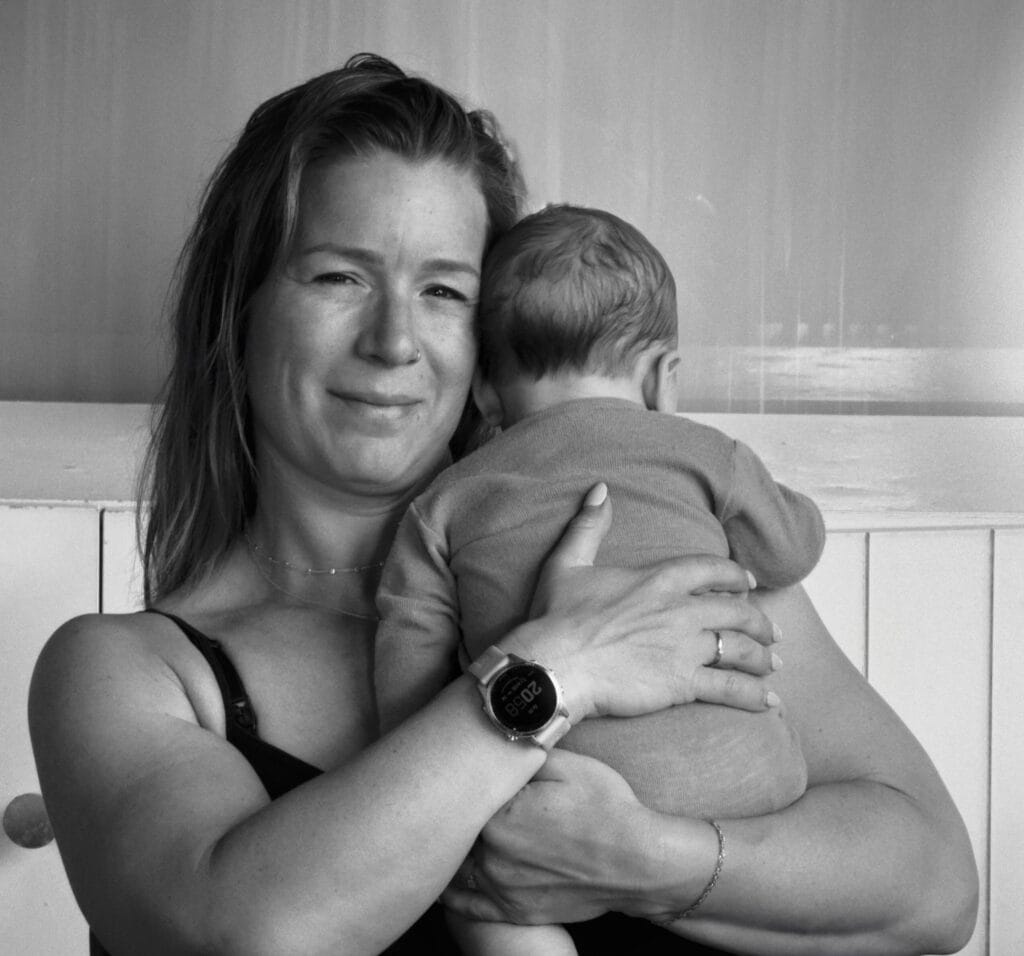
Becoming a mother made that especially visible to me. My definition of strong could no longer depend only on what my body could perform or how fast I could push myself forward. Sometimes strength meant accepting that my capacity was different that week. Sometimes it meant patience. Sometimes it meant allowing myself to feel frustrated instead of immediately trying to fix the frustration. And sometimes it meant letting go of the idea that the strongest version of me should always be able to do more.
That hasn’t made physical strength less important to me — if anything, it’s made my definition of strength bigger. Your strongest quality can also become your limitation the moment you use it automatically. Real adaptability means recognising when your usual strategy works, and when the situation is asking something different of you.
Becoming stronger means expanding your options
I no longer think about strength purely as the ability to produce more force or tolerate more discomfort. I think about it as options.
- Physical strength gives your body more capacity — a heavy object becomes relatively lighter because you’ve become stronger.
- Mental strength gives you more strategies when something gets difficult — instead of immediately quitting or blindly pushing through, you have choices.
- Emotional strength gives you more space between feeling something and acting on it — instead of being run by the first reaction, you get to decide.
Underneath all three sits a fourth, quieter form of strength: strength in yourself — the freedom to listen to what you actually need, and to choose from your own values instead of autopilot.
The resistance doesn’t necessarily disappear. You simply become more capable of dealing with it. And that might be one of the most useful definitions of strength there is: not a life free of resistance, but more capacity and more choice when resistance shows up.
Try it yourself: score your Strength Formula
Here’s a short version of the exercise I use to close every workshop. Grab your phone or a notebook and score yourself, 1 to 10, on each:
- Physical strength — how well can my body handle the physical demands I place on it?
- Mental strength — how well can I keep acting on what matters when I feel doubt, resistance or discomfort?
- Emotional strength — how well can I feel and regulate my emotions without them automatically steering my behaviour?
Then ask yourself one question: if one of these improved by just a single point, which would make the biggest difference in my life right now?
That’s your next rep.
The takeaway
Physical, mental and emotional strength aren’t the same thing, but they share one principle. Resistance challenges your current capacity. Your strategy determines how you deal with that challenge. Repeated experience creates adaptation. And over time, something changes.
Sometimes you can lift more. Sometimes you can sit with discomfort a little longer. Sometimes you catch an old reaction before you act on it. And sometimes the strongest thing you can do is choose a different strategy altogether.
Becoming stronger isn’t simply about learning to push harder. It’s about developing more capacity, more awareness, and more freedom in how you respond. The stronger you are, the lighter you live.
Bring the Strength Formula to your team
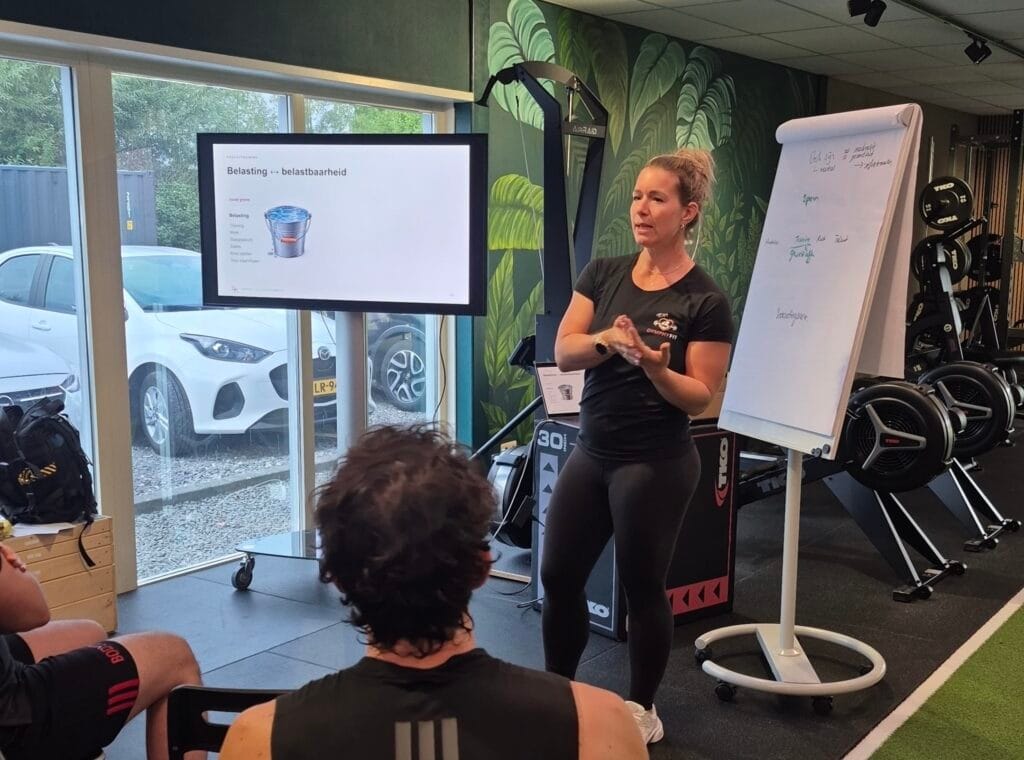
This article is based on my interactive Strength: the Success Formula workshop. Together we explore physical, mental and emotional strength through exercises, group reflection and evidence-based principles, translated into situations people recognise from sport, work and everyday life.
The workshop can be tailored for companies and teams who want to explore resilience, adaptability, personal leadership and dealing with resistance in a practical, interactive way — the kind of session people are still talking about weeks later!

Dymphy de Jong is a certified personal trainer and coach, ranked among the top 10 fittest women in the Netherlands through CrossFit, and a teacher at Milo Education.
She believes in the power of vulnerable strength, and has spent over 14 years translating what she’s learned in the gym — and as an athlete, coach and mother — into tools people can use in everyday life.
Our expertise
Personal training for high performers IN AMSTERDAM OUD-WEST

Strength

Slim

Mom (to be)

Fundamentals (beginners)
